RSS Feed

Category Archives: Thoughts

I know you are, but what am I?

On Wednesdays, my plucky Canterburians join with the Lutherans for a joint evening of discussion, fellowship, and food.  This semester, we’re discussing ‘Modern Saints:” people who have applied their Christian faith in very tangible ways in the not-so distant past (Archbp. Oscar Romero and the martyrs of El Salvador, Dietrich Bonhoeffer and Edith Stein, the Berrigans, Archbp. Desmond Tutu and the leaders of South Africa, etc.)

I noticed something in the past few weeks, and it’s the same phenomenon I’ve noticed in every community I’ve ever served: rural or urban, Virginia or Arizona, young or old.
As the students described it, the problem was that ‘Christians’ had taken over everything.  These Christians they described were against gay marriage and civil unions, didn’t like people of other faiths, and also were not fans of contraception, or really women at all, as we had seen in recent weeks.  And this was pretty much why we should keep Christians out of politics.
This is not just a ‘kids these days!’ thing.  I have never served or attended a parish where I have ever heard a majority of the parishioners declare themselves Christian.  (“Christian” borders on an Other-ing term in the Episcopal Church; we are Episcopalian before we are anything.)
In some ways, it’s hard to argue with this.  When several of the candidates for presidents are claiming to speak for the entire Christian faith, it’s difficult not to take them at their word, when there’s no clear voice calling them on it.
But at the same time, those students speaking so articulately of their frustration with modern politics?  They are Christian too!  Those people who fill the pews in every church I’ve ever served?  Also Christians!  (And not the Satan-possessed kind, either.  Sorry, Rick Santorum.)
And if we’re all Christians, and we don’t agree with all that’s being done in the name of Christianity, then…we should probably, possibly, look at this, yes?  Because either there is a small group of zealots doing some crazy stuff in the hijacked name of our Lord and Savior with our tacit permission, or many of us have simultaneously decided to be open, tolerant, loving people on our own, in total opposition to this, the Gospel of Smiting (and two thousand years of received tradition, but who’s counting?)
See, this is what I think.
This is a theology problem as much as it is a PR problem.  The PR problem gets talked about all the time–how we need to reclaim the airwaves, use these here interwebz, LOLcats, we can haz Emerging!Churches, etc.  These things are absolutely true.  Mainline Protestatism lost the past few decades to the fundamentalist evangelicals the moment that first guy bought a new-fangled TV station for cheap in the early 1970s.
But it’s a theology problem too.  We’ve all heard the carefully-crafted theology around fundamentalist beliefs.  In fact, most people today know that theology so well that they can’t tell that not all Christians believe it.  Ask the average person walking down the street about where people go after they die, and they will probably spout something about the saved believers in heaven and the damned in hell and St. Peter at the gate.  Now, ask them about what might be involved in eventual universal redemption, and note their look of confusion and panic.
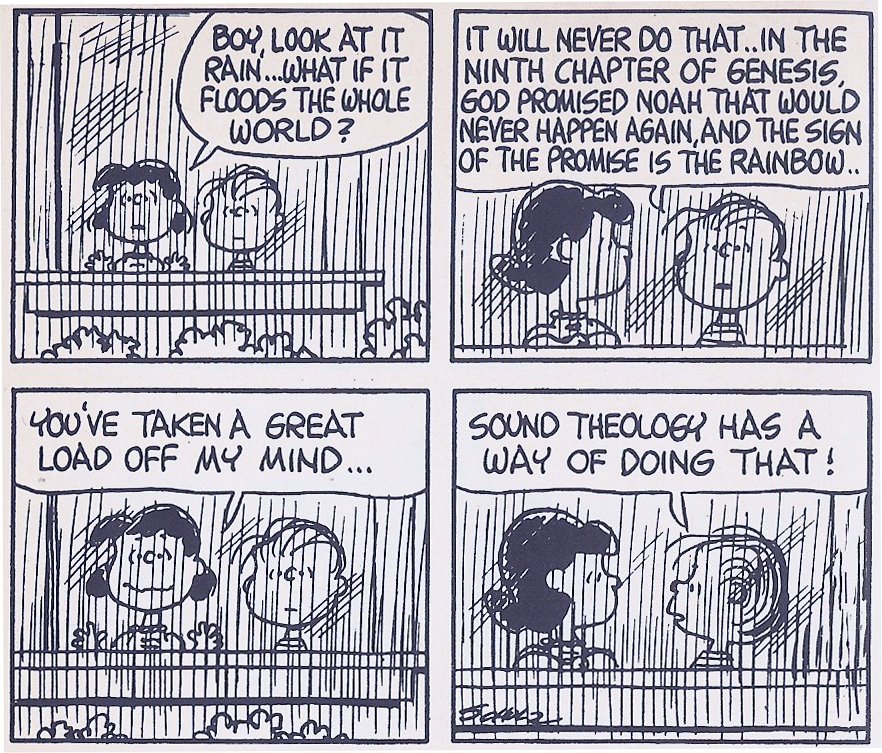
And that’s our fault.  There’s no answering, well-publicized and widely-taught cohesive theology to the really loud stuff.  (Unless you read Miroslav Volf, or Moltmann, AS YOU SHOULD, but I accept that not everyone has that sort of time.  Also, that stuff is sort of systemic, and not issue-based.)
So here’s my plan:  I am starting a Theology For the Rest of Us series here on the blog.  ::Sound of trumpets!::  It shall be theology that attempts to explain why progressive Christians believe the things we do.  Like: women as full moral agents!  Marriage as something other than Procreation-Station!  Stewardship and care of the earth!  And all other topics as may be assigned.
We, in the wider church, need to become better at talking about our faith in concrete, logical terms, in order to give an “accounting for the hope that is in us”, as the Bible, and my preaching prof both say.
“So, Come!  Let us reason together!”

Living with Ghosts


Arizona has been a state for 100 years this month.  And it seems that the state legislature is attempting to set some sort of record in their centennial year.

Earlier this year, the state passed a law (HB 2281) that cuts off up to 10% of the school district’s funding if the school provides any class that ‘promotes the overthrow of the US government, promotes resentment toward a race or class of people, is designed primarily for pupils of one ethnic group, or advocates ethnic solidarity.’ (a quote from the law.)
Shockingly, the one school district in the state that offers classes like this is the Tucson school district, which had a Mexican-American Studies program, integrating Latino history into its curriculum.  They also have a majority Latino student population.
And now that’s gone.  Under threat of losing $15 million dollars of funding from the state, the Tucson school board ended the ethnic studies program on February 1, and boxed up the offending books.  These included The Tempest, by William Shakespeare.  (Nothing gives kids ideas of revolution like ye olde English.)
All this, because the state decided children should not be exposed to any history other than the generic old-dead-white-guy variety. (Also, they really dislike Shakespeare.)
I went to a meeting in Flagstaff last week, about how best to show our support for the beleaguered, book-deprived students of Tucson.  It was heartening to see so many people so fired up.  And I knew going in about the issue, I knew about the legislature, I knew about the books, and the ethnic studies.
But nothing had prepared me for reading down the list of banned books, and seeing so many of the books I had read, and related to, as a teenager.  Two books by Sandra Cisneros, a book by James Baldwin, a book by bell hooks.  (I suppose it’s a small comfort that they appear to be equal-opportunity in their disdain?)
One of the fallacies about ethnic studies programs, or multicultural studies programs, is that, like the bluntly-written law suggests, they break people into ethnic groups.  That they only address people of minority status.  Teaching about Black History Month is only of interest to Black kids.  Teaching Women’s History is only important to girls.  Mexican-American literature is only valuable to Hispanic kids.
Which is ridiculous.
Teaching everyone’s history, everyone’s art, just insures that everyone gets to be a voiced part of the larger story.
I grew up in southeastern Virginia, in a neighborhood with a plantation marker at the end of my block.  History, of all sorts, was under my feet.  The story of the owners and the slaves, the story of the rebels and the Tories, the story of the native peoples and the colonists.  Everyone was already there.  The question was, who was going to get a voice, and who would remain silent.
The more stories that got told, the more stories I learned, the more I realized that I owed a debt to all of these people.  Not just the ones who looked like me, thought like me, or spoke like me.  My life, my world had been affected in some way by all of these diverse people: the ones who left powerful legacies, and the ones who died nameless.  All the little histories that get stuck in the margins were really bound up in the big, ‘master narrative’ of American history we like to tell.  You can’t tell one without the others.  They’re inter-dependent.
On Ash Wednesday, we pray the Litany for Penitence, which makes a point of talking about our interdependence, both on creation, and on other people.  We ask forgiveness for our abuse of creation, our prejudice toward others, and our exploitation of other people.  (Actually, read the litany sometime in the BCP.  It’s virtually all about what we’ve done to other people.)  As a rule, we tend to really hate dwelling on that part, because we like to believe that we are Individuals! (Complete with nifty Boot-Strap Lifting action!) We are all John Wayne all over here, rugged and needing no one, only casually strolling in to save the day*.
But this is not the case.  We’re social creatures, bound one to another.  We’re stuck together, all of us.  Your story is my story, and vice versa.  And to silence either one of us is to disfigure the story beyond telling.
So, for the next while, I’ll be working on the (unofficially-dubbed) “Flagstaff <3s Tucson” project, bringing attention and support to the banned ethnic studies programs in Arizona.  Call it a Lenten side-project.  I shall keep the blog updated as things progress.
In the meantime, I ask your prayers/thoughts for the kids down in Tucson and for all of us in Arizona.
* and building an airport, putting our name on it, not having any feelings….I’ll stop now.

Dick Vitale surely has some strong opinions on this

March Madness, for the uninitiated, is the national NCAA basketball tournament which takes place each spring.  It features, not just basketball games, but betting pools, brackets, and inane color commentary, delivered with way too much passion for the subject matter at hand.  (“You have to understand, Larry, that whoever wins, that’s who has put the ball in the hole the most. And that’s just what Georgia Tech needs to do here today.”  “That’s EXACTLY RIGHT, Tom. GENIUS.”)

It is a very popular event.  I follow it intermittently so that I avoid entirely alienating my basketball-playing relatives.  (I can’t run, dribble, shoot, or even pass, but gosh darn it, I can explain the difference between zone and man-to-man defense!)

And so it gives me great pleasure that there is now some ecclesiastical equivalent.  Somewhere my greatest well of inane knowledge can be channeled in service of competition!    Hooray!  I finally get to fill out brackets too! (See?!  Geeks do run the 21st century!!!)

The way it works is this:

You go here: Lent Madness’s website.  (Or, if this poses problems for you, I have also put their convent widget over on the side, see?)

Print out a bracket.  Fill it out with your picks for each match up, all the way to the GOLDEN HALO!!!!

As Lent begins, people will vote for their favorite saint in each matchup.  The polls with remain open for a given amount of time.  (More here.)  The ‘winning’ saint continues to the next round, until finally, ONLY ONE REMAINS.  ::insert triumphant, Olympic music here::

Each day, on the Lent Madness website, guest writers will offer their perspectives on the saints in the poll.  If it’s been a while since you’ve flipped through Holy Women, Holy Men, or you’re under the impression that Episcopal saints are all ancient, plaster-of-paris  renditions of holiness, then really, you should try this. (If only for St. Brigid, who once turned a lake into beer, to slake the thirst of her abbey.  Total badass.)

Canterbury at NAU will be posting our brackets in my office, with a prize for the overall winner, and another prize for the most correct picks.  (Already, the trash talking has begun on Twitter.)

So join us!  Whoever said spiritual disciplines couldn’t be awesome?

Wear heels. Dig them in.

Two weeks ago, I got an email from our campus Roman Catholic ministry inviting me to their weekly speaker series.  This week, they were hosting a speaker from San Diego, a woman who had started her own affiliate of the National Organization for Marriage.  She would be speaking on “Re-defining Marriage: How Same-Sex Marriage threatens Religious Liberty for all of us.” *

Oh joy.
My immediate reaction was confusion.  The Lutherans, and the United Christian Ministry were also invited, and all of us had had the “come to Jesus” conversation of progressive Christians with the other Christian ministries on campus over the summer.  This boiled down to:  Lookit!  Be nice to the gay kids, and if you find that you can’t pull this off, then send them to us, and we’ll do it for you, and save face for you.  If you can’t one of the Allies, then at least be Switzerland, for crying out loud.
But, clearly, the Catholics were not being all Swiss about this issue this week.  So what was I called to do in this moment?
There’s a case to be made for staying away. I could plead ecumenical unity, I could listen to the voice of my Paranoid!Bishop in my ear, asking why I was stirring up things again**, I could point out that it’s not like the Catholics had ever done anything to me personally (lately), and we’re all the church, and the church should stick together!
And sure.  Ecumenical unity is fine (though long gone) as is avoiding any theoretical confrontation with the bishop.  They are perfectly nice sorts of things.
But right now, the sorts of things this woman was saying is passing as mainstream Christian thought in much of the country, and I have not elected her my spokesperson.
So I went.
I went, and I sat towards the back in my collar, and my “I’m wearing a grown-up, respectable suit!” suit, and heels. (I had been invited, after all.)  I informed my students of what was happening, and asked if they wanted to join me.  Because they are uniformly awesome, they turned out in force, and asked if they could make t-shirts for the occasion.
I sat in the back and listened quietly and peaceably, while taking incredibly sarcastic notes.  The speaker basically achieved the perfect storm of right-wing social theory.  Marriage is for the sole purpose of creating and nurturing children.  Biological ties only create a family, and these ties cannot and should not be broken.  (This really surprised me–I don’t believe I’ve ever heard someone advocate against adoption the way she did, although she allowed it in ‘special circumstances.’)  Birth control is evil, as is gender neutral language, economic equality between the sexes, and the ‘blurring of gender roles.’  The Obama Administration is apparently out to get religious people, in its requirement that everyone (except churches and other religious institutions) have to provide birth control coverage to employees cost-free.  (The nerve!  Asking women to decide for themselves whether to purchase it or not!)
So she was very thorough.  She even threw in a condemnation of the estate tax (because I think it’s a rule at this point for speaking publicly as a conservative.)
But then came the Q&A.
The questions were pretty benign.  There was really mild pushback from the students, but none that she appeared to hear.
Then I got the mike.
I pointed out that really, her main problem seemed to be with the Kim Kardashians and the Britney Spears of the world: straight people who were extremely bad at marriage.  People who abused their kids and each other, people who were trapped in the cycle of addiction, people who were unfaithful, people who were unable or unwilling to be good parents, people who got married in elaborate weddings then divorced 72 days later, etc.
And none of those things applied to the committed gay couples I knew, people who were lined up, knocking down the doors of my church, asking to make public vows of fidelity and love to each other–the sort of thing my church preached was the sacramental self-sacrificial love that marriage signified.
And since that was the case, then why on earth not encourage these people to get married?
Well, she said, looking stormy.  Marriage isn’t about love.  It’s about children.  There are lots of different sorts of love, and lots of different sorts of relationships, but marriage is about producing and caring for children.
(……..Honestly.  I got nothing.)
That’s pretty much where it ended.
After it was over, several students unaffiliated with Canterbury came up to me and said how glad they were that I had asked my question.  The Catholic priest at the Newman Center came over, and said he was glad I had spoken up.  “I was waiting for someone to introduce the concept of real people into her speech.”
No kidding.
Look.
Theology always, ALWAYS involves real people.  Theology is never without consequences, and never exists in a bubble.
Stand in public, and proclaim that “marriage is about children, and not love” and immediately, you have sent the message that people who cannot have children, or choose not to, are not really married.
Stand up and say that biology, and not the courts, create a family, and now you’ve started casting doubt on the legitimacy of people who were adopted.  (Which, really, for a conservative Catholic– is quite a mind bender.)
And each time you say stuff like that, you’ve told people that there is something wrong with them.  You’ve told them that for some reason they may not be able to control, God is angry with them. God is seriously displeased with huge swaths of the population. “Horrible people!” God evidently says “Why can’t they live up to these impossible and unachievable standards that exist out here in the ether?”
By virtue of the Incarnation, if there is one thing in the cosmos God is concerned about, it’s actual people.  Not theories, not pretty dreams about what people should be, but actual, honest-to-Jesus, people.  People as they lived, and died, and celebrated and suffered.
Jesus called actual people to be disciples.  Peter, if you’ll note, was a complete doofus, albeit well-meaning, for much of his life.  Paul contradicted himself enough to rival a pretzel.  There were enough rough-and-tumble arguments in the nascent church to bring succor to the current watchers of the HoB/D listserv and England’s General Synod.  I’m not even going to go into the rumors and issues around the women Jesus hung around with.
The point is, he hung around with people.  Actual people.
His teaching served them; people weren’t meant to serve it.  (Wait, that sounds awfully familiar.)
The Spirit works through people.  Woe betide us when we stop paying attention.
*I’m not linking to her site.  You can Google “The Ruth Institute” if you want, but I’m not inclined to give this lady any more site views than she already has.  Aside from the many (MANY) issues I have with her espoused (ha!) policy positions, the irony is more than I can stand.  Their logo is virtually identical to that of Greendale Community College, of “Community” fame.  Really, I’ve not entirely written off the notion that we were all being punked.
**This is a song in my head now.  It is sung to the tune of “You’re making things up again, Arnold” from “The Book of Mormon.”  It is very catchy.  And features hobbits.  And Yoda.

Behold, I am tweeting a new thing!

As an elected deputy to General Convention 2012, I get to partake in an interesting exercise in in-box management known as the HoB/D listserv.  It’s an email listserv open to all deputies, bishops, and diocesan and Church Center staff (I think).

Thus, many, many people are on this email list.  Collectively, General Convention is the second-largest democratic body in the world.  (India’s parliament is no.1.  We’re no. 2.  T-shirts are on order.)
The conversations are great to read, but like many things in these here interwebz, people who read only, and do not post, greatly outnumber those who do post.  So most conversations get skewed pretty fast, in my opinion, towards the same few voices who protest.
This week, news broke into general consciousness that several people had been live-tweeting the recent Executive Council meeting.  This wasn’t news to those of us on Twitter.  But evidently, it’s news to people who aren’t on Twitter, and someone on Exec Council raised a (similarly public) objection.
So for the past two days now, a heated conversation has been flowing forth on the HoB/D listserv on the appropriateness of Twitter in meetings.
I should like to point out the following things:
1.) TWO DAYS.  This has been a conversation for TWO DAYS.  If the argument is that Twitter distracts from the business at hand, then I doubt you’re making that argument any more cogent by continuing to press it for TWO WHOLE DAYS.
Ahem.
 2.) I’m unclear on how tweeting reports of what’s happening is more distracting than taking private notes.  And I’m extremely hesitant to launch a blanket accusation of inattention against all committee secretaries.  Who would like to go there?  Line up, please.
But most importantly!
3.)  The argument I keep hearing repeated against Twitter as a source of information is that of bias.  Which is entirely true.  Twitter reports are biased.  It’s one person, or one group of people expressing their take on things.
Right.  And now I’d like to introduce you to Rupert Murdoch.
The thing is, this is not at all different from the New York Times, or the Wall Street Journal or the Washington Times or Fox News.  Or the biases involved in books out of Intervarsity Press or Zondervan. All media is biased.  There is no such thing as non-biased media.  (Just like there’s no such thing as a impartial narrator. The Great Gatsby should have taught us that.)
The difference is that with Twitter, as with the new social media, there’s a little picture beside the words, with the person’s name, so that you know exactly who’s perspective you’re getting.  And with one click, you can get as many different perspectives on the same topic as you want. Presto!  Instant variety, instant perspective shift–if you want it.
Of course, that means that no one person/thing has control over the flow of information.  Which can be tricky. Information flowing all over the place means that leaders have to justify themselves and their decisions, and explain things so convincingly that people consciously support them.  Power suddenly becomes diffuse.
It’s worth pointing out that it wasn’t until the development of Guttenberg’s printing press that the Vatican invented the imprimatur: an official blessing that allowed the book to be printed and read.  In 2010, imprimaturs started being applied to iPhone apps as well.
There are ways around this new, diffuse power structure we’re moving into.  But they aren’t good ways.  And they aren’t Episcopal ways.  One of our strengths has been our giant, colorfully democratic method of governance.  Now is not the time to sacrifice that.